.png)


English Intercede
1998 - 2026
Sign up to receive the new editions by email when they are released

The Shia: Islam's 120 Million Minority
2006 Vol. 5: Sept/Oct
In a display reminiscent of a tribal blood-fest, a Shia Muslim crowd of several hundred gathers near Tehran,
preparing to offer homage to martyrdom. It is the tenth day of the Islamic month of Muharram, and the Ashura festival has begun. The thud of metal on flesh reverberates as men whip their backs with pointed lengths of chain. Others strike their heads with knives or razors, slapping their chests and chanting to the point of collapse.
White ceremonial garments are soaked in blood. Women hold young boys high, their scalps split in the same manner as their fathers. The throng revels in these frenzied acts, the primal pitch and surge ending in absolute exhaustion.

Shadow of the Crescent: Islam in America
2006 Vol. 4: July/Aug
"According to Muslim teachings, God first revealed His word in the Holy Qur’an to the prophet, Muhammad, during the month of Ramadan. That word has guided billions of people across the centuries, and those believers built a culture of learning and literature and science. All the world continues to benefit from this faith and its achievements" President George W. Bush, Nov 19, 2001
Issued from the White House, these public statements from sitting American presidents illustrate Islam’s emergence as a major religion in America. Muslims in America are changing the cultural landscape at an ever-increasing pace.

The Rise of Eurabia?
2006 Vol. 3: May/June
Not since the fall of Granada in 1492 and the subsequent Battle of Vienna in 1683 has the presence of Islam been felt so deeply in Western Europe. The rapid growth of Muslim communities has become the preeminent sociopolitical and religious issue confronting all of Europe. The resulting conflict not only reverberates among European political and religious leaders, but is keenly felt by ordinary European citizens. Muslim presence in Europe was minimal prior to 1945. The first wave of Muslims who came to Europe shortly after World War II were either those who emigrated from former European colonies as a consequence of decolonization or were “guest workers” recruited for industrial development in Europe.
The Muslim Perspective of Jerusalem
2006 Vol. 2: Mar/Apr
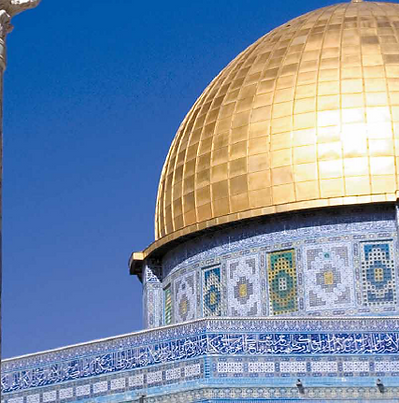
Without question, one of the greatest controversies in the world rages over Jerusalem, a city held sacred by the three monotheistic faiths—Judaism, Christianity and Islam. Most Christians understand why Jerusalem is important to them and Jews, but they question the Muslims’ claim to the holy city. Since Muhammad ministered in Mecca and Medina in Saudi Arabia, what connection do Muslims have with this city in Israel? There are three major reasons why Muslims feel connected, not only to Jerusalem, but also to Palestine.
The Role of Dreams and Visions in Reaching Muslims
2006 Vol. 1: Jan/Feb
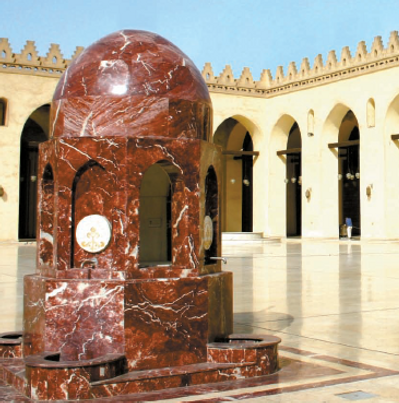
Throughout the Bible, God has revealed His heart and mission to draw all people to himself. “All people” includes Muslims. Yet some Christians see the conversion of Muslims as an impossibility or, at the least, a rarity. God continually sends people to minister among Muslims. God performs signs and wonders among them. In fact, Stuart Robinson surveyed 600 Muslim background believers and found six reasons Muslims chose to follow Jesus.

Responding to Radical Islam
2005 Vol. 6: Nov/Dec
Radical Islam’s agenda is world domination through all possible means—including terrorism and violence. Today over 2,500 mosques in the United States promote Islam and the number is growing rapidly. How should we respond in light of the London bombings, current events, and the rapid growth of Islam in the West?

The Roots of Islamic Fundamentalism
2005 Vol. 5: Sept/Oct
Islamic fundamentalism is not of recent origin. Its roots go back further than the current attacks on the West or attempts at a Middle East peace settlement. In this article, we want to look at three categories of factors that caused the rise of Islamic fundamentalism and the terrorism it has produced. These factors are historical, dealing with the history from Muhammad’s time until today; anthropological, such as social, religious and political factors; and ideological, the ideas of specific, influential Muslims.
Iran: Through a Glass Darkly
2005 Vol. 3: May/June
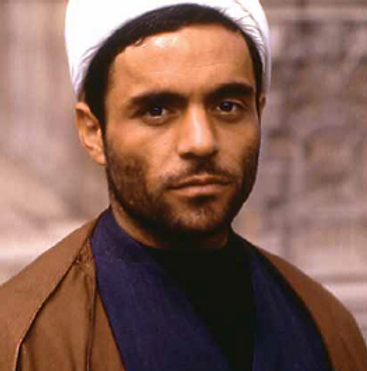
For now we see through a glass darkly... (1 Corinthians 13:12). When Paul wrote these words he was speaking of the glory that will come when we see the Lord face to face. But heaven is not the only thing that we cannot see clearly right now. It is very difficult to get a clear picture of what is happening to the Church in some countries. Iran is one of those countries. How do we peer through this dark glass and find out what is really happening in Iran? I believe that in order to view the present with accuracy, we must also have a sense of history.

The Hajj: Pilgrimage to Mecca
2005 Vol. 1: Jan/Feb
Hajj, the Muslim pilgrimage to Mecca, is one of the five pillars of Islam, the duty of every Muslim who is physically and financially able to perform it. In the 19th century B.C., Muslims believe, Abraham—the revered patriarch of Islam, Christianity and Judaism—was instructed by God to build a house of worship in a narrow valley between two barren ridges in a place today called Mecca, on the present site of the Ka’bah, the cubic structure inside the Grand Mosque.

Getting the Basics Right
2004 Vol. 6: Nov/Dec
Ruth and I met our first Muslim family when we were students. For Hamid and Halimah, the University of California at Davis was very different from their home country of Tunisia. We helped Halima with her English and shared some meals together. When we left to attend Turkish language school in Monterrey, they accepted an Arabic New Testament as a parting gift. Looking back at those times, I realize how easily we came together. It was natural for Hamid and Halima to look for friendships within the university community. For a first effort, we did okay. But there were four things we needed to learn.

Muslim Beliefs
2004 Vol. 4: Jul/Aug
Christians and Muslims have serious theological differences. However, these deep disparities often obscure the common ground we share. Mutual understanding is further hindered by the fact that Islam and Christianity have many words in common, but often with very different meanings. Consequently, it is imperative for Christians to understand crucial differences in order to build on mutual values and beliefs. This understanding will help the believer establish and maintain Christ-like relationships with his Muslim neighbors and communicate the gospel of Jesus effectively.

Islam's Appeal to America
2004 Vol. 3: May/June
John Esposito, the most influential non-Muslim scholar on American Islam, at times, sounds prophetic. The Islamic Threat: Myth or Reality? (1992) suggest Islam is a threat to the West--particularly America. A decade later, in Unholy War: Terror in the Name of Islam (2002), he says a war conducted militarily, rather than diplomatically, will lead to an increase in anti-Americanism, global instability, and bloodshed. American foreign policy, he says, is what is behind the anger and agenda of militant Muslims.