.png)


English Intercede
1998 - 2026
Sign up to receive the new editions by email when they are released

Abul and Mr. Johnson
2012 Vol. 5: Sept/Oct
My name is Abdul Muhammad. I grew up in an Islamic country in the Middle East. As a child I was proud to attend the local mosque with my devout father. He would tell me stories from our holy book, the Quran. I was especially fascinated with the stories about the Prophet Jesus (peace be upon him). The miracles of healing he performed, as well as raising people from the dead, captivated me. What incredible power he possessed.

What is Ramadan?
2012 Vol. 4: July/Aug
On August 1, 2011, President Obama released a statement marking the first day of Ramadan, the holy month for Muslims. He acknowledged its significance and wished Muslims, both locally and around the world, a blessed month. The fact that more and more high profile figures of American society are acknowledging Islamic practices and holidays is a clear indication that the presence of Islam here in America is a growing phenomenon. Christians should be on the alert, not to treat this as a threat, but as an opportunity to reach people with the Gospel who otherwise would be difficult to reach in their homelands.

Sufism and 'the Beloved'
2012 Vol. 3: May/June
La ilaha illallah, la ilaha illallah, la ilaha illallah (there is no deity but Allah) … on and on flow the words of the Arabic chant in cadence with the rhythmic heartbeat of the Sufi Muslim who is enthralled by the prospect of connecting with God. A Sufi Muslim is well-acquainted with the practice of Islamic chanting known as dhikir. It is the defining characteristic of a Muslim who has embraced Sufism.
God's 'Hello' to Muslim Women: Christian Friendship
2012 Vol. 2: Mar/April
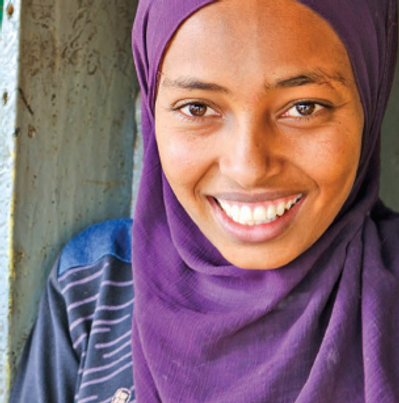
If every Muslim woman and girl were to stand shoulder to shoulder in a straight line, that line would wrap around the world more than eleven times! Sadly, the vast majority of Muslim girls have never heard an adequate witness of the gospel — not even once.
When Muslims Ask, "Who is Jesus?
2012 Vol. 1: Jan/Feb
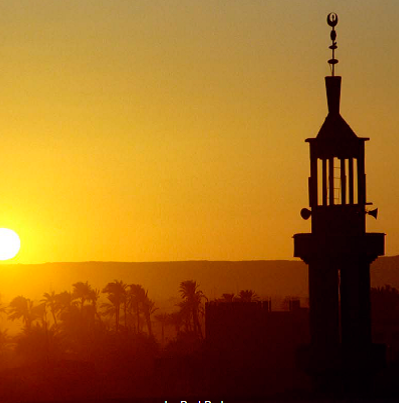
As we see increasing evidence that the Spirit of God is moving across the Muslim world, more Muslims are asking the question, “Who is Jesus?” They may not be asking it of Christians or out loud, but it is certainly on their minds. Other Muslims ask it with an antagonistic attitude seeking to argue with us over this central Christian belief. Some will come to us sincerely wanting to know the answer from a true follower of Jesus. What shall we say to them and how shall we convey this truth?

What is Prayer?
2011 Vol. 6: Nov/Dec
During his lifetime, Samuel Zwemer (18-67-1952) was alternately call the "Apostle to Muslims" and the "Apostle to Islam." Zwemer was one of the founders and pioneer missionaries of the Arabian Mission in the Arabian Gulf. He was a prolific author, writing mainly on the subjects of missions to Muslims, Islam, evangelism, and theology. This article provides a glimpse into the source of his passion for reaching Muslims with the gospel--his prayer life.

The Muslim Jesus
2011 Vol. 5: Sept/Oct
Some argue that the Jesus of the Muslim sources, the Quran and hadith, is essentially the same as the Jesus of the New Testament. Christians view Jesus Christ as the second person in the Godhead, the Lord who is to be worshiped and adored. Christ’s incarnation and substitutionary death on the cross are seen as God’s redemptive plan from all eternity, forming the basis of God’s offer of free salvation to all who believe.

The Role of the Mosque in Islam
2011 Vol. 4: July/Aug
Mosques are the outward and visible symbol of Islam. The mosque is the most important institution in Islam, serving as a house of worship and as the center of authority and of communal life for Muslims throughout Islamic history. It has also been the central point for the dissemination of Islamic beliefs and practices. The word ‘mosque’ (masjid in Arabic) is derived from a root meaning ‘to prostrate,’ one of the postures of Islamic worship. Another commonly used word for mosque is jamaa, derived from a root word meaning ‘to gather’ or ‘gathering.’

Revolution in the Arab Muslim World
2011 Vol. 3: May/June
hope you are watching all that is going on in the Muslim world. God is on the move. Muslims are tired of oppression and many are seeking freedom. It is clear that Islam has failed as a political and a social system. Muammer al-Qaddafi, who has funded the building of mosques and the propagation of Islam throughout the Western world, is now using his guns and jets on his own people. Why? Because political Islam is all about gaining and keeping power.

The Insider Movement: A Brief Overview and Analysis
2011 Vol. 2: Nov/Dec
An astounding phenomenon, though not exclusive to ministry to Muslims, is overtaking much missionary work among Muslims. A growing number of professing Christians involved in witness to Muslims are a part of what is called, "Insider Movements,” or the “Insider Movement.” This controversial approach to ministry has resulted in many of its proponents affirming that Muhammad was a prophet from God, the Quran is at least partially-inspired Scripture, and it is possible for Muslims to retain their Muslim identity as “Muslim followers of Christ.”

Muslim Theological Objections
to Christianity
2011 Vol. 1: Jan/Feb
Wherever you meet Muslims and have the opportunity to discuss your faith, their first objection is often to the truthfulness of God’s Word. They have been taught that the book we claim is God’s Word is, in fact, not His Word, but a book that no longer contains God’s truth. They believe it has been changed, perhaps by our forefathers, so it is no longer trustworthy. They have been told not to read it because it will lead them astray. Nowhere in the Quran is an understanding of how the Bible came to be, what it really is, or that its central theme is Christ. Even if the first objection from your Muslim friend deals with Jesus and what He did or said, in reality, the attack is being directed toward the written Word.
Signs and Wonders among Muslims
2010 Vol. 6: Nov/Dec
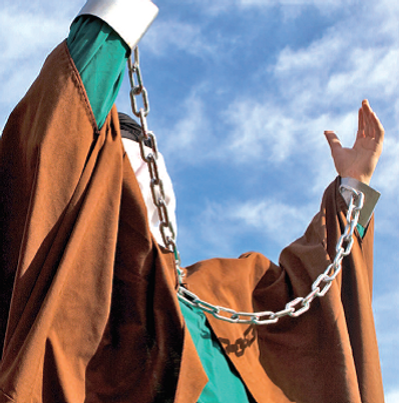
Muslims know that they are not the only creatures on earth. Among the many other forms of life, they believe in spirit beings. They refer to these beings as the jinn. They also believe that some of the jinn are good and that others are evil. It is the evil jinn that Muslims fear the most. According to Islamic teaching, the evil jinn serve as Satan’s cohorts or legions. Their aim is to continue their rebellion against God by inflicting harm on people.